Teacher: Gabriel TURINICI
Summary:
1/ Deep learning: major applications, references, culture
2/ Types of approaches: supervised, reinforcement, unsupervised
3/ Neural networks: presentation of the objects: neurons, operations, loss function, optimization, architecture
4/ Focus on stochastic optimization algorithms, proof of convergence of SGD
5/ Convolutional neural networks (CNN): filters, layers, architectures
6/ Technique: back-propagation, regularization, hyperparameters
7/ Networks for sequences: RNN, LSTM, Attention, Transformer
8/ Generative networks (GAN, VAE)
9/ Programming environments for neural networks: TensorFlow, Keras, PyTorch and work on the examples covered in class
10/ Stable Diffusion, LLM
11/ AI Agents: what is « agentic »: definition, autonomy, reasoning, decision-making, agentic workflows
12/ AI Agents fundamentals: harness, tools, skills, memory, context, planning, reasoning and action
13/ AI Agents: coding and evaluation: coding an agent, packages, frameworks, tool integration, architectures, evaluation, reliability and observability
14/ Ethical and alignment perspectives: safety, autonomy, human oversight, accountability, transparency and alignment
| Documents | ||
 MAIN document (theory) and Agentic implementations : see your teams channel MAIN document (theory) and Agentic implementations : see your teams channel(no distribution is authorized without WRITTEN consent from the author) | for back-propagation | SGD convergence proof |
| Implementations |
| Function approximation by NN : notebook version, Python version Results (approximation & convergence) 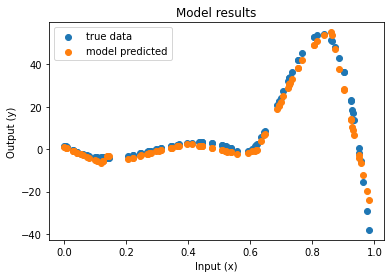 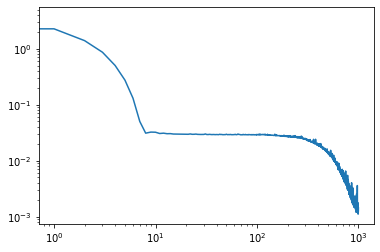 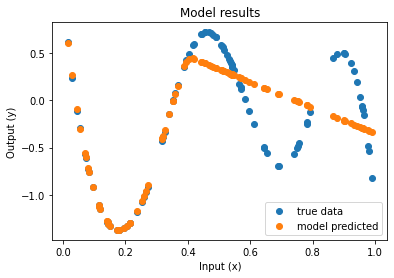 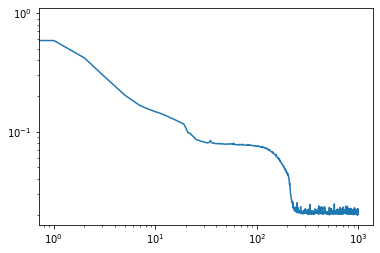 After 5 times more epochs 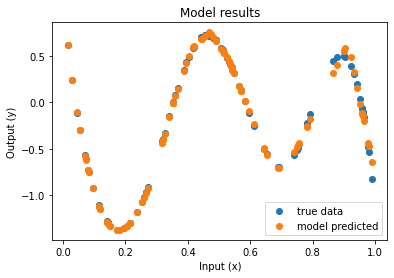 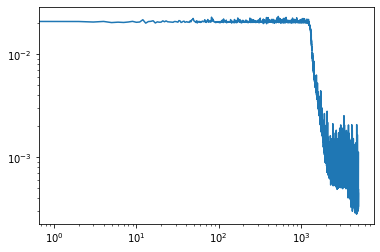 Official code reference https://doi.org/10.5281/zenodo.7220367 |
| Pure python (no keras, no tensorflow, no Pytorch) implementation (cf. also theoretical doc): – version « to implement » (with Dense/FC layers) (bd=iris), – version : solution If needed: iris dataset here Implementation : keras/Iris , pytorch (tensorflow) CNN example: https://www.tensorflow.org/tutorials/images/cnn Pytorch example CNN/MNIST : python and notebook versions. Todo : use on MNIST, try to obtain high accuracy on MNIST, CIFAR10. |
| VAE: latent space visualisation : CVAE – python (rename *.py) , CVAE ipynb version |
| Stable diffusion: Working example jan 2025: python version, Notebook version Old working example 19/1/2024 on Google collab: version : notebook, (here python, rename *.py). ATTENTION the run takes 10 minutes (first time) then is somehow faster (just change the prompt text).  |